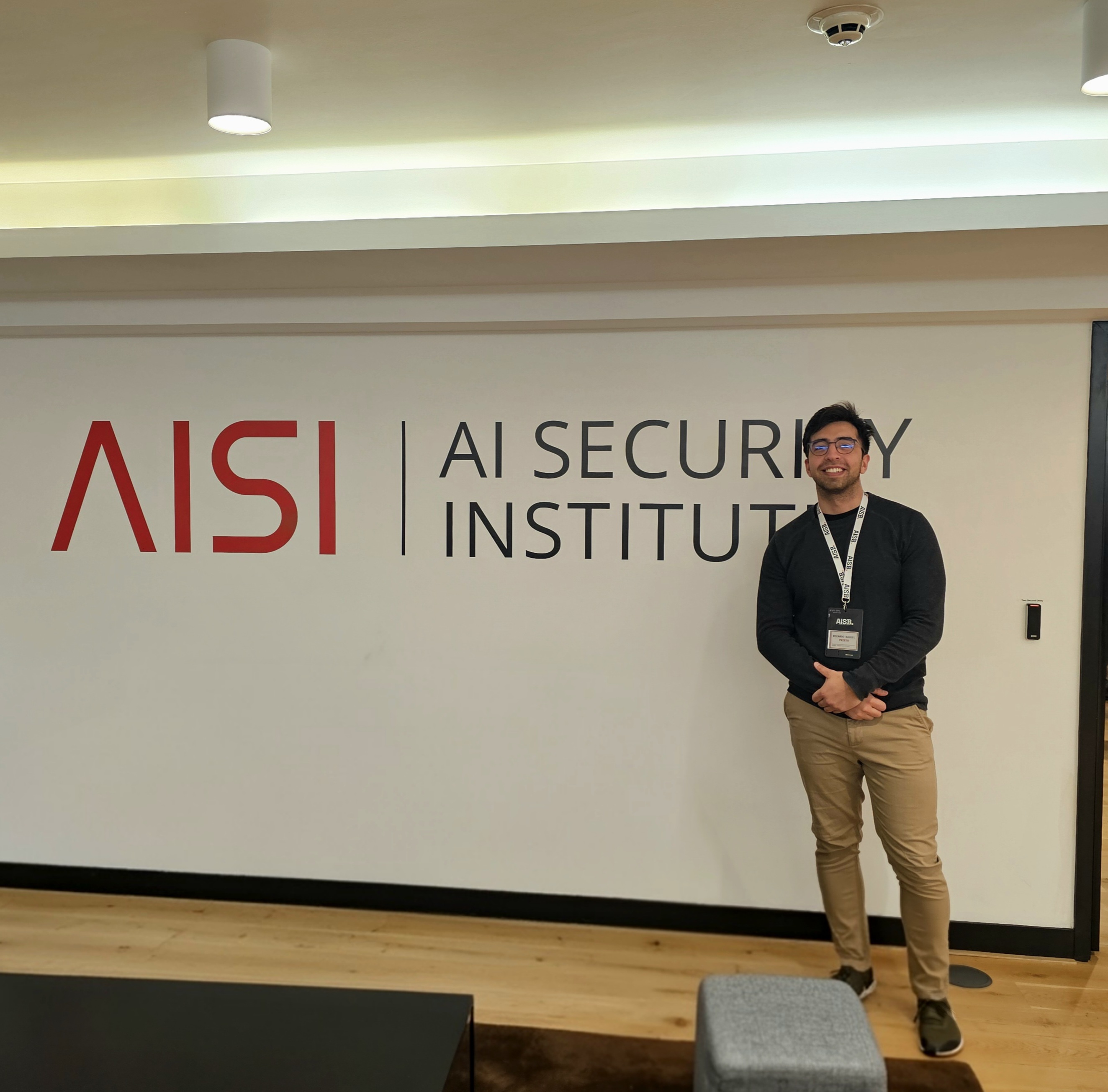
I went to the AI Security Bootcamp in London wanting to learn more about AI security. I was already working on some of these problems and expected to go deeper into the technical side and the core foundations of Machine Learning and Artificial Intelligence... I came back with something I hadn't gone looking for and hadn't expected either: a sense of meaning and much more clarity about what I want to do with my life.
I think something clicked inside me there. I'd finally found my purpose (those who know me a little more personally knew I'd been looking for it for a while, without much luck). It became much clearer to me how much these questions matter and how much I want to contribute, even though I still have so much to learn.
I come from cybersecurity, especially offensive security, AppSec and, more recently, the security of systems that use AI. Much of my work has involved very concrete questions, things like: can an application be attacked? Where do its trust boundaries fail? What can an agent do with the permissions we've given it? And how do we turn those findings into controls that actually work?
All of that experience brought me here. The projects, the certifications, the hours spent reading, what I've learned and the problems I've tried to understand are the foundation I want to keep building on.
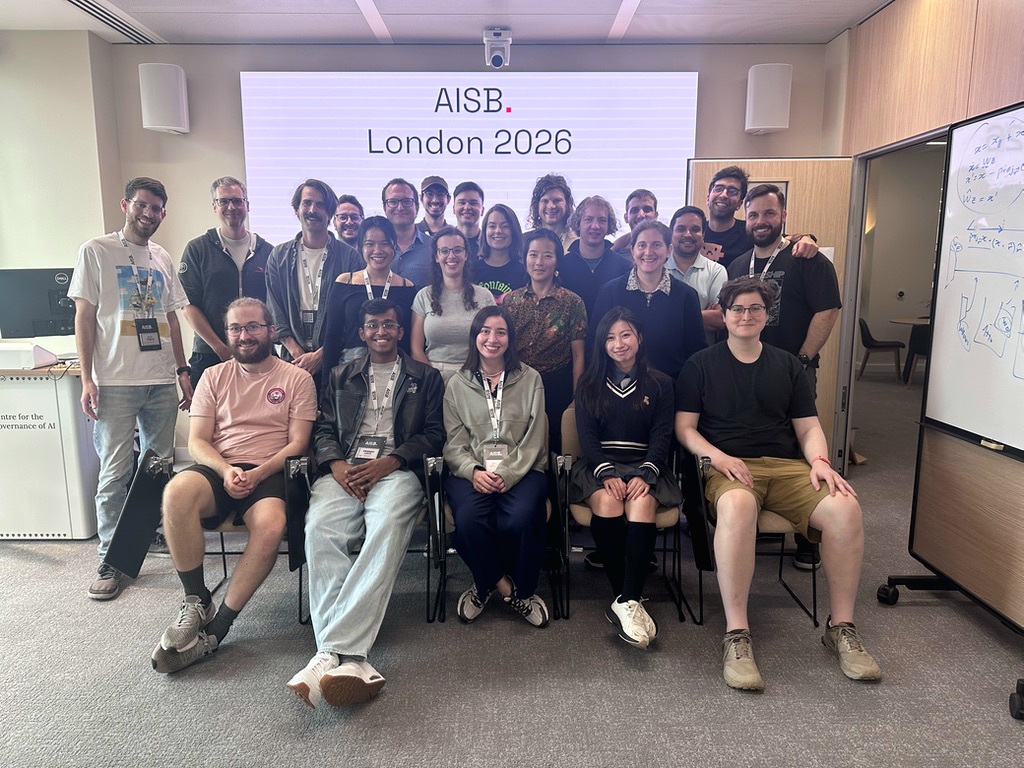
If you'd like to know more about the programme, I invite you to read about my AISB experience here: what the week was like, what I found difficult and what I brought home from London.
The question became larger
The bootcamp helped me lift my gaze and think beyond a single application. How do we keep increasingly capable AI systems under meaningful human control? What evidence do we need before putting them into production? Who can decide to stop when that evidence isn't enough? And what happens when doing so conflicts with the pressure to move faster?
These are difficult questions, but what motivates me also has a lot to do with what I hope AI will help us do better.
I'm not in the pure stasis camp (people who prioritise stability, control, predictability and reducing risk as much as possible), but I do want to help us build useful, capable systems that truly improve people's lives. Finding renewable energy sources, finding ways to cure currently incurable diseases, improving life for millions of people: that's what AI brings us, or at least its most positive side.
The idea is for us to be able to work with these increasingly intelligent systems while understanding what they do, where they fail and how to preserve our ability to decide and intervene. For me, reducing risk is part of making all of this go well while progress and innovation continue (with more precautions and at a slower pace).
Ultimately, the bootcamp took me deeper into models: their foundations, reinforcement learning, adversarial ML, backdoors and AI control. There were classes I couldn't follow all the way through and coding exercises that demanded more than I knew about machine learning and PyTorch. I had to ask questions, read a lot, use AI to help explain things and work with classmates who brought different strengths. All of that helped me see more clearly where I need to grow and invest time in those specific areas.
My cybersecurity experience is useful, but it doesn't replace those foundations or the skills I need to do research. I left with a clearer sense of what I can contribute and what I still need to learn. I'm still at the beginning of this part of the journey. Enterprise AI Security isn't AI Safety, much less AI Engineering.
The discussions about governance and incentives stayed with me too. Some of those questions used to feel distant, almost like science fiction. During the week they became much more concrete: how we evaluate a system, what authority we give it and how we preserve our ability to intervene. You can design a control that makes strong technical sense. The question is what happens when applying it costs money, delays a launch or conflicts with the incentives of the people making the decision, whether that's the leading AI labs or the countries furthest ahead in this field, the United States and China.
That's why I want to understand both sides: how a control works and what it takes for someone to actually use it when it matters. How do we prove that it works, who can require it, and how much weight does that evidence carry in a real decision? I don't have a settled answer to all of this. These are questions I want to work on.
I also don't know exactly how AI will advance or how quickly, and maybe I'm entering a race I've already lost (the time I can spend studying this is limited, and so is the pace I can learn at. Meanwhile, AI keeps advancing in leaps and bounds, and everything seems to point to a cognitive explosion within a few months). But I don't need to know every possible future to recognise that this problem matters to me and that this is where I want to put my effort, give it my best and see if I can make my own small contribution.
I want to dedicate my life to helping make AI safer and more beneficial, understanding its reach and impact today and in the not-so-distant future. I want to put my experience, my time and my desire to learn at the service of that work. The bootcamp helped me understand this with a clarity I didn't have before.
What changes for PhiloCyber
PhiloCyber has evolved along with me. It started as a blog, grew to include resources and a YouTube channel, and then I tried to shape it into a consultancy (at one point I had three clients from different parts of the world and got to work on what I love most). That chapter is part of the project's history. Now I want it to be my personal space to write, share tools and resources, and show the work I do in AI security.
I'm no longer taking on new consulting work through the site. The door is still open to doing research with other people, collaborating on projects, talking about job opportunities and, of course, sharing ideas. PhiloCyber's direction is changing, but my desire to work with others will always be there.
What I've already done still has a place here. I'll keep writing and sharing material through the YouTube channel. The talks on MCP security and other topics are also part of that journey.
I'm still developing the AI Red Teaming Field Guide and finishing the Agentic Threat Modeler. I want other people to be able to use them, review them and build on them. Sharing them already has value, without requiring them to become commercial products. Here's to sharing knowledge, to open source and to working towards a better future for everyone!
Today I can contribute articles, talks and practical resources, including some that are still in development. Later, I want to do research on my own and with other people. I want to start with focused questions, learn to investigate them properly and produce work that others can review and challenge.
I want the site to make that clear... what I've done, what I'm working on and what I want to do next. It should be possible to distinguish a resource in development from a completed result without having to guess.
For now, the next step is to continue the resources already underway, strengthen the foundations I still need and move towards a concrete research contribution. The projects and roles may change as I learn where I can be most useful. The direction is clear.
I'm deeply grateful to everyone who made the bootcamp possible, to my classmates and for the financial support from BlueDot Impact that enabled me to attend. Without that support, travelling to London for the week wouldn't have been a realistic option for me. Making these opportunities accessible changes who can be there, learn and contribute. I came home with a much clearer sense of what I want to do with the experience I already have, and of everything I still want to learn.
If you're working on something related and think we could contribute and do more together, get in touch. If you've used one of the resources and have a correction, an idea or a suggestion, let me know too! I want to hear what helped and what we could improve!
I want to bring the experience I've built in security into the work I want to dedicate my life to.
As always, thank you for reading and for your support. I wish you all the best, wherever you are!
Richie